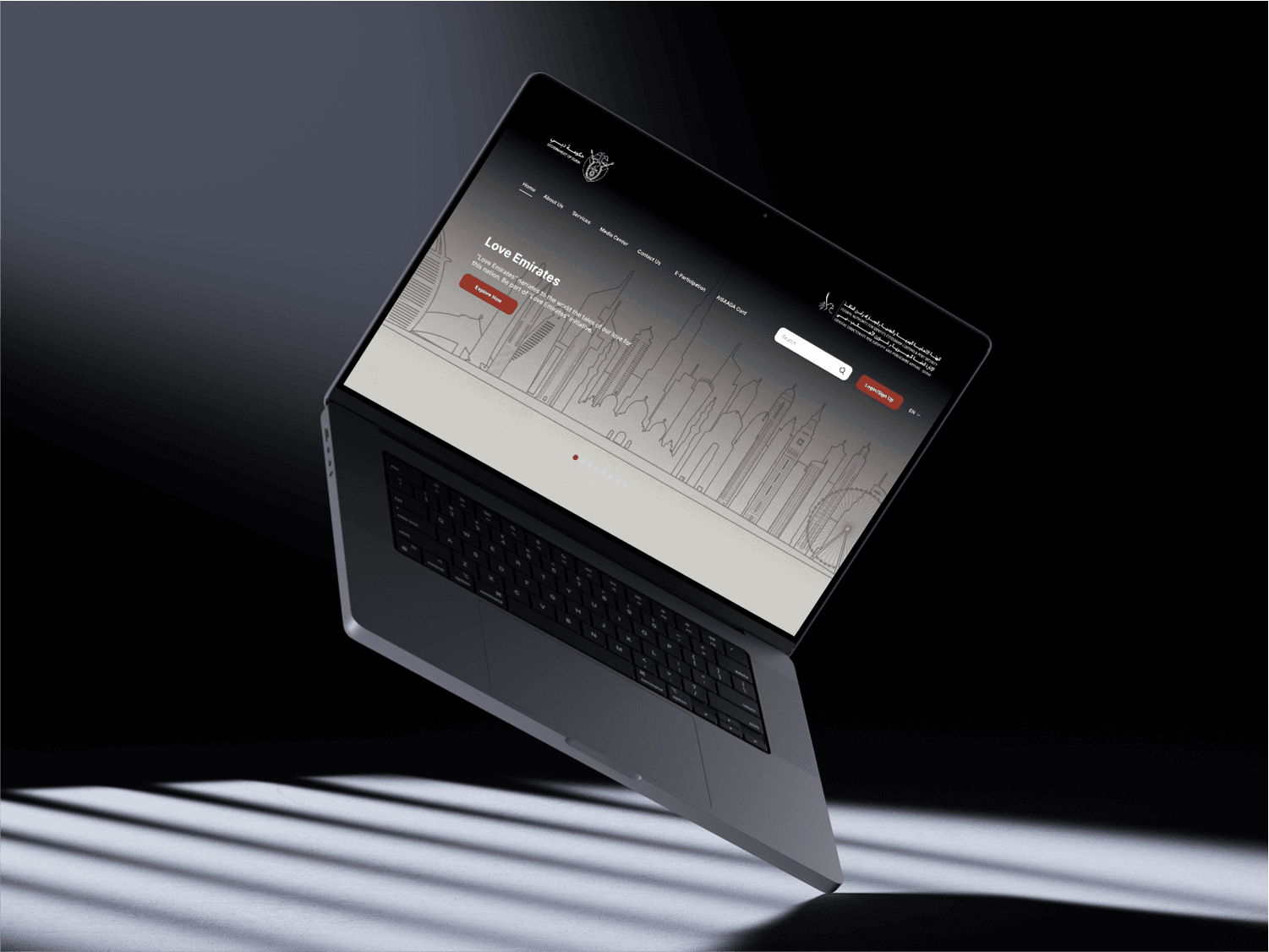
GDRFA User Flow Redesign
Fixing the 5-Year Tourist Visa Application Flow: Simplifying one critical journey for millions of users
Project Overview.
Growing up in Dubai, I was always impressed by how smooth everything felt. But as a UX designer, I’ve come to realize that behind that ease lies a network of systems that only work when they’re built with care and clarity.
So when my own 5‑year tourist visa application was rejected and I couldn’t figure out why, I knew I had to dig deeper.
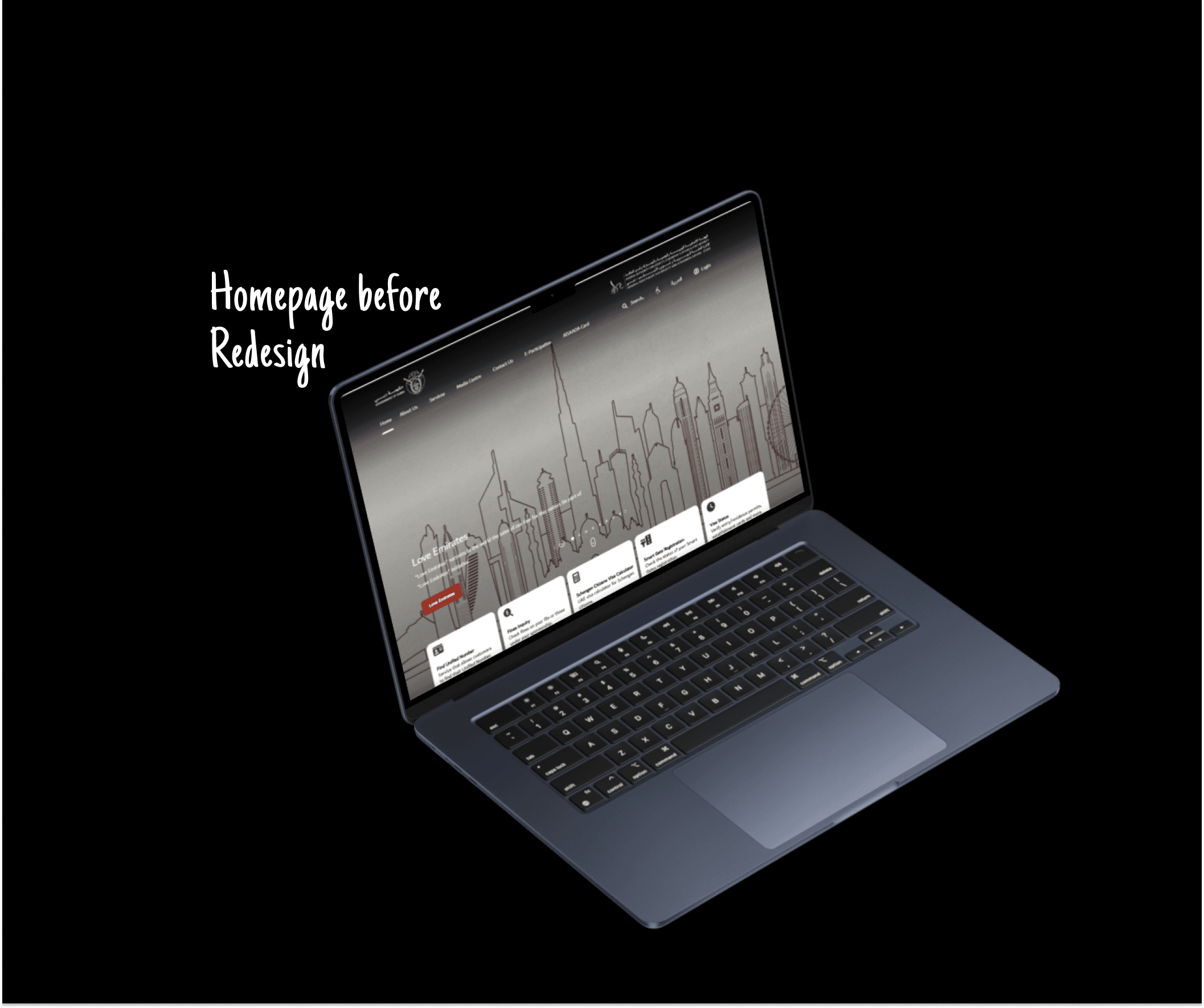
This wasn’t just about fixing one screen. It was about improving a critical government service that thousands of people use. I focused entirely on the 5‑Year Tourist Visa application flow: from starting the application to retrieving the rejection reason. This was a self‑initiated, research‑driven project to explore how Dubai’s commitment to being a smart, inclusive, and seamless city could show up more clearly in this flow.
My goal? Redesign it to feel as smooth as Dubai promises.
Three words I wanted this experience to embody: Inclusive. Seamless. Secure.
Problem Statement.
Micro (Flow-Level Problem)
The 5-Year Tourist Visa application flow presents major usability gaps:
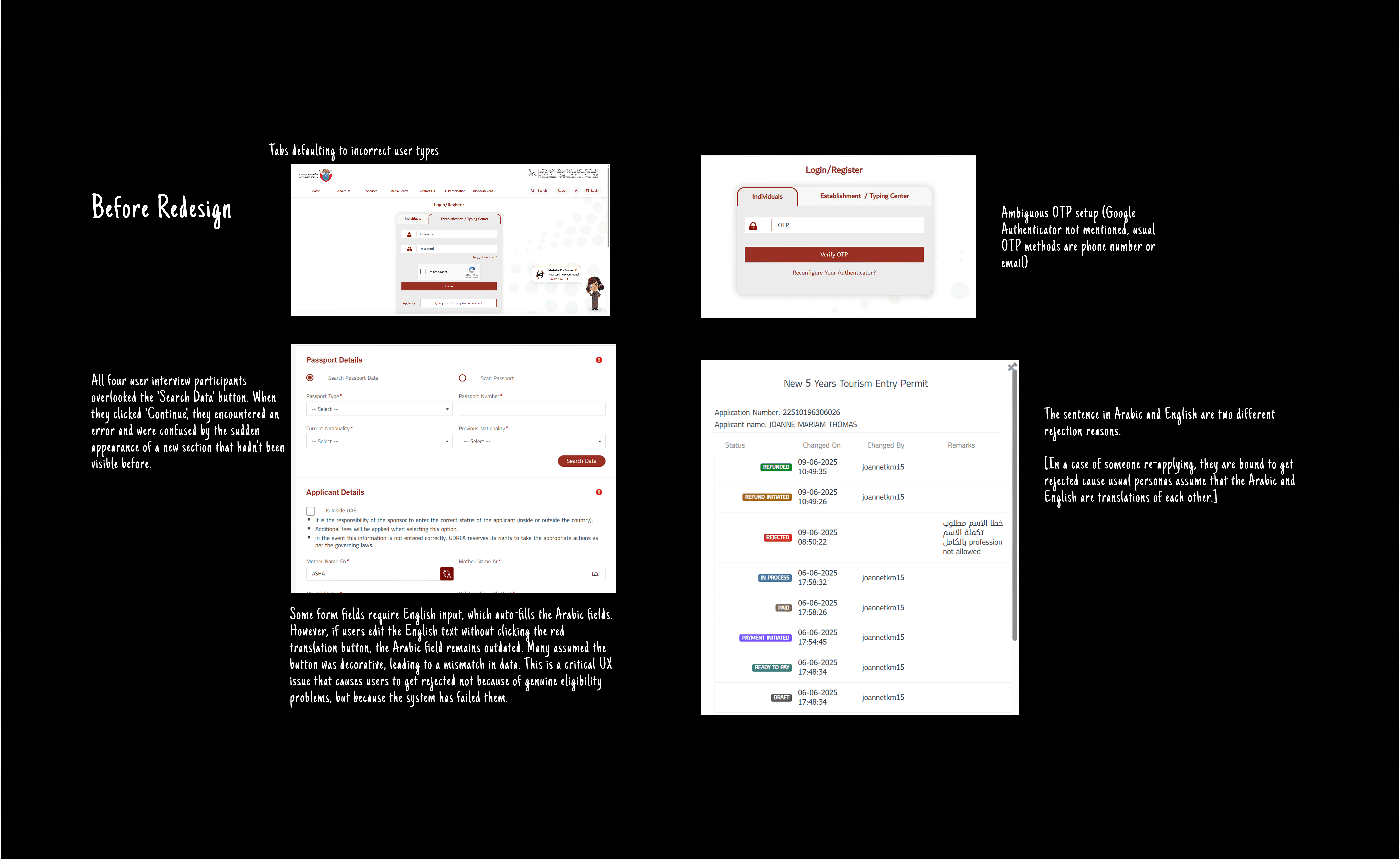
Tabs defaulting to incorrect user types
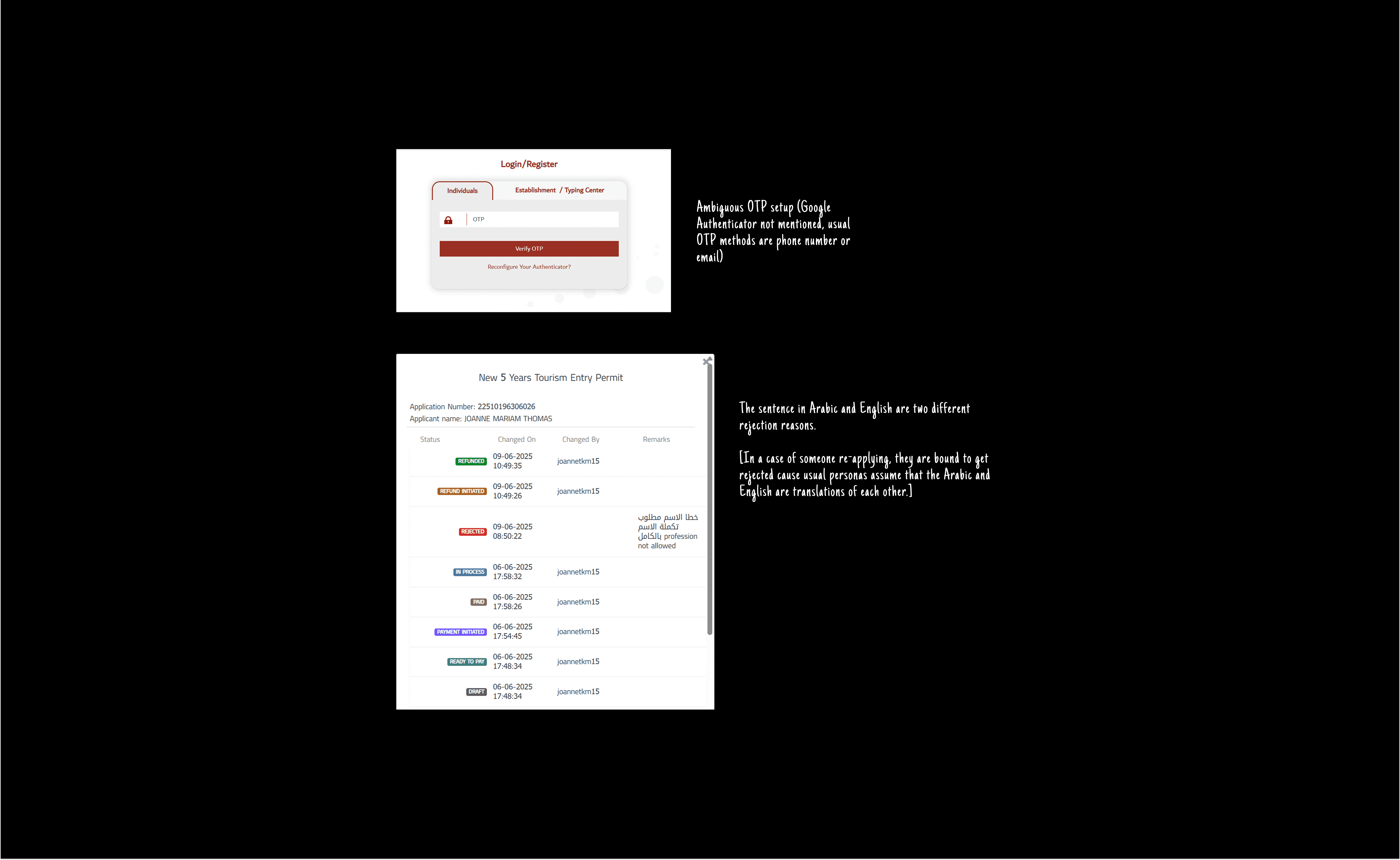
Ambiguous OTP setup (Google Authenticator not mentioned)
Confusing form structure (e.g., applicant vs sponsor fields unclear)
Hidden rejection feedback, split across English and Arabic, with no translation support
These frictions led to application drop-offs, confusion, and loss of trust, particularly for non-Arabic speakers and non-tech-savvy users.
Macro (Platform-Level Problem)
These micro-frictions are symptoms of broader issues in GDRFA's platform:
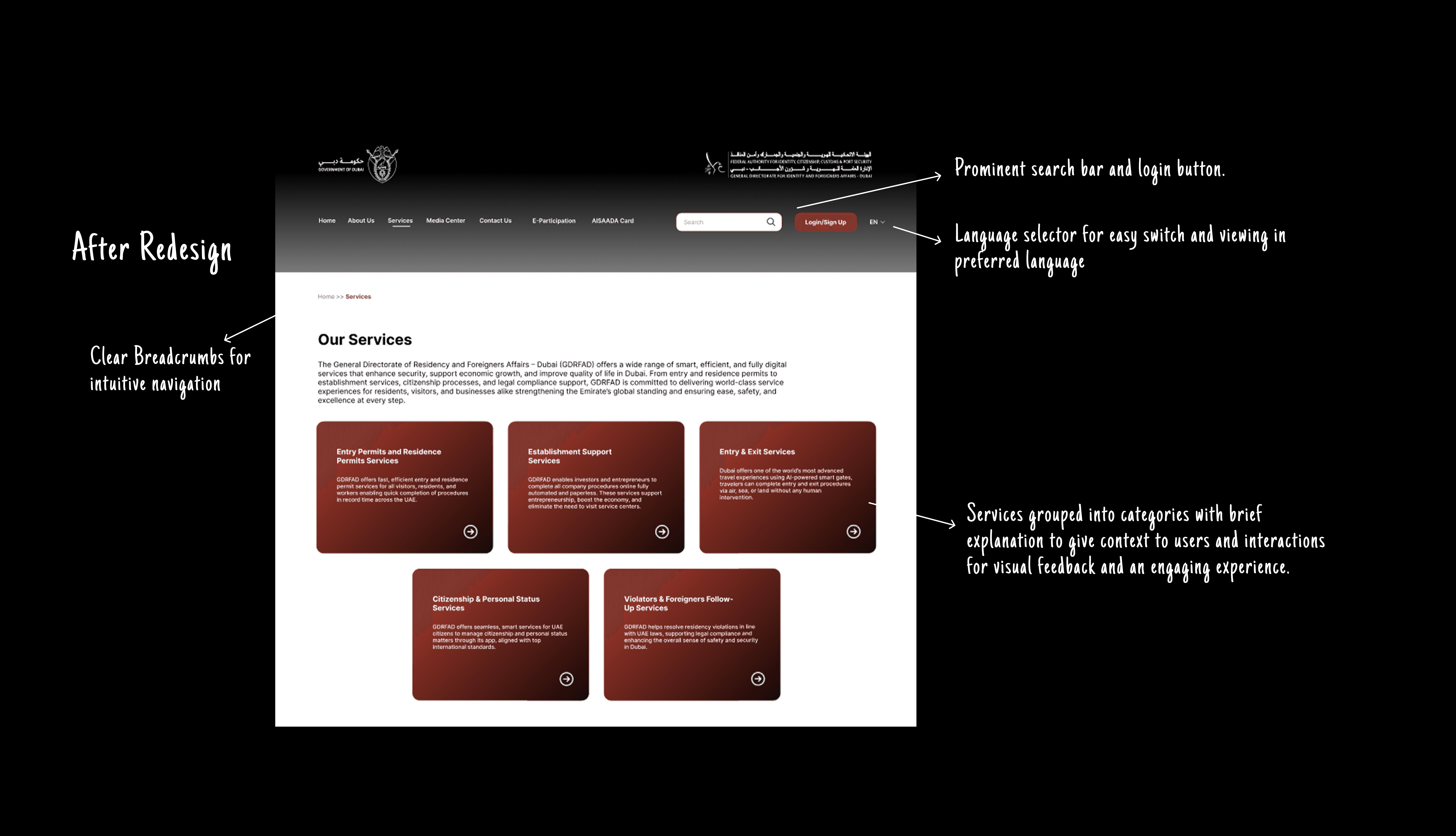
Inconsistent navigation
Lack of progressive disclosure for first-time vs. returning users
Poor error handling and feedback
KPIs (Before vs After).
While I didn't have access to live analytics, I conducted simulated usability sessions to benchmark success metrics:
KPI | Before | After (Redesigned Flow) | Improvement |
|---|---|---|---|
Login success on first attempt | 1 / 4 users | 4 / 4 users | 100% ↑ |
Found rejection reason easily | 1 / 4 users | 4 / 4 users | +300% clarity |
Avg. time to complete application | 23.5 mins | 9 mins | ~61.7% faster |
Overall avg. experience rating (out of 10) | 5.25 | 8.6 | 63.81% ↑ |
Research & Insights
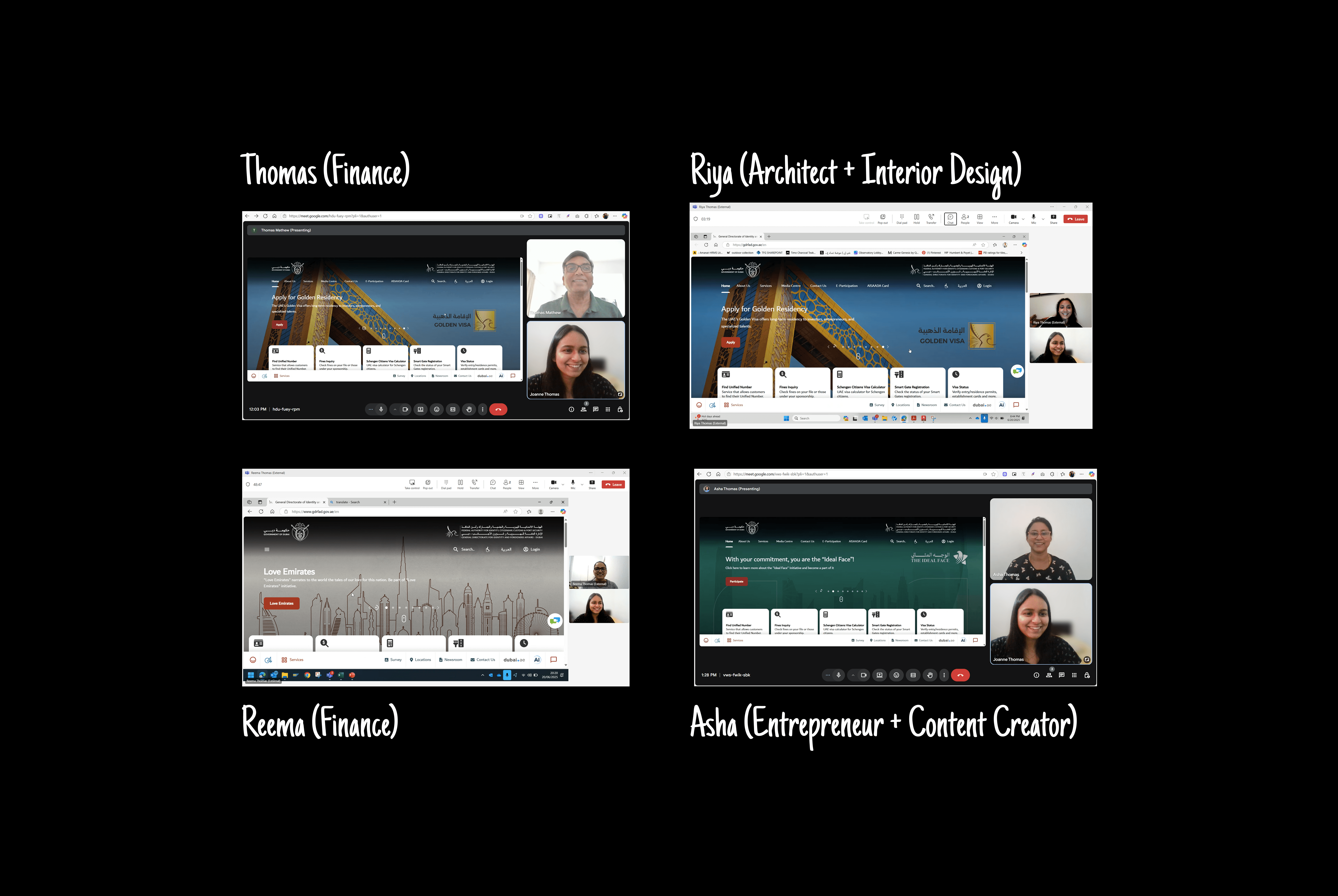
Before redesigning the flow, I interviewed four users representing a broad range of GDRFA’s audience from tech-savvy professionals to less digitally comfortable users. Each walked through the entire visa application and rejection reason journey.
Who I Spoke To:
Reema (32) — finance professional, tech-savvy
Riya (34) — architect, detail-oriented and design-aware
Thomas (63) — semi-retired finance expert, moderately tech-savvy
Asha (59) — microbiologist, minimal tech experience
Common Issues Identified:
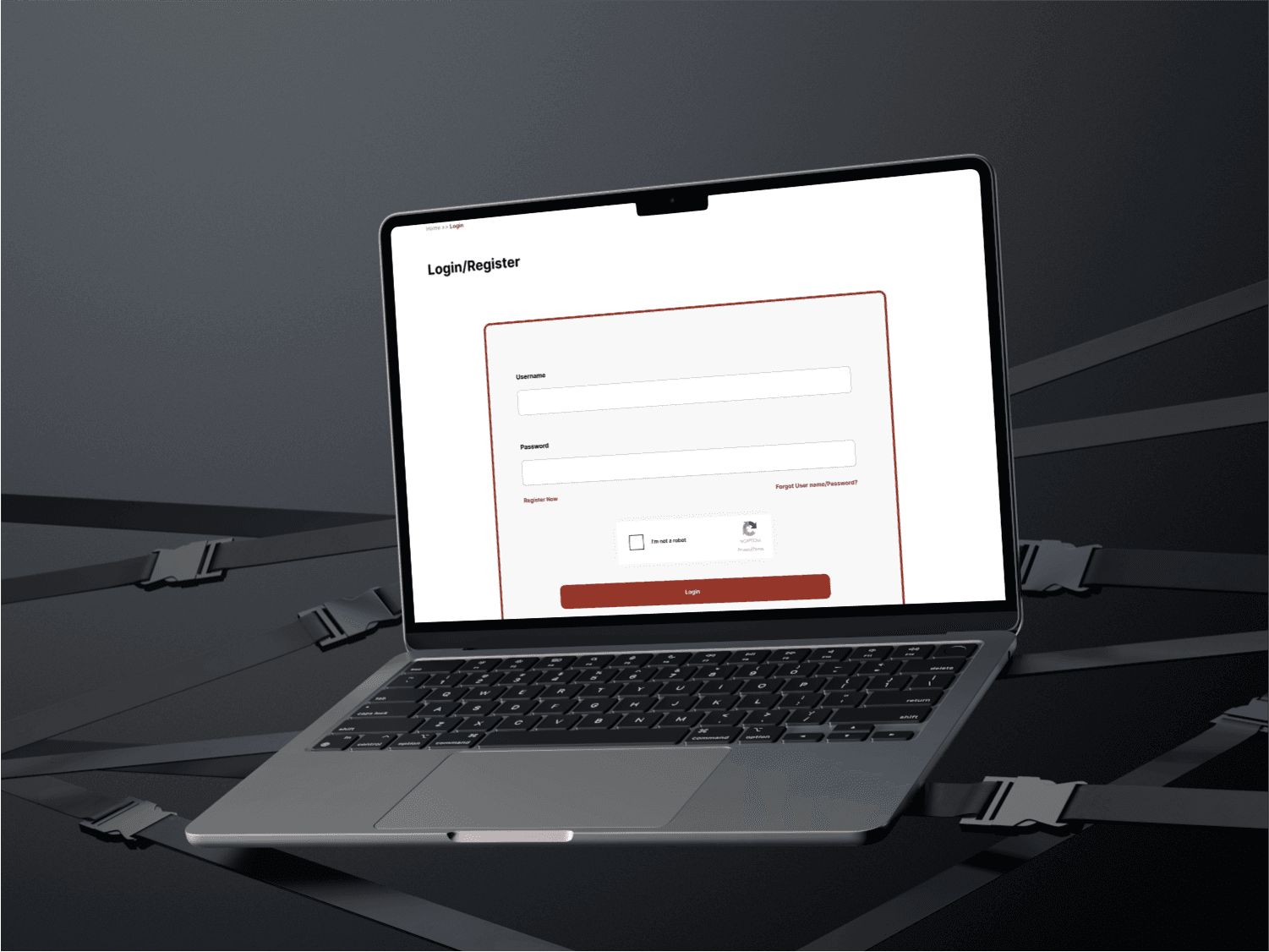
Login confusion: Everyone landed on the wrong login tab first, wasting time and attempts.
OTP/2FA friction: Users expected email or SMS OTP but faced unclear Google Authenticator setup with no instructions.
Hidden or unclear buttons: The “Search Data” button was often missed, causing errors and confusion.
Conflicting rejection messages: Arabic and English rejection reasons differed, causing distrust and uncertainty.
Sponsor vs. applicant details: Form sections lacked clarity on whose information to enter, leaving users guessing.
Tedious document uploads: Uploading multiple pages individually felt outdated and cumbersome.
User Sentiment & Timing:
Participant | Time Taken | Rating (Out of 10) |
|---|---|---|
Reema | 10 mins | 6 |
Riya | 18 mins | 5 |
Thomas | 30 mins | 5 |
Asha | 35 mins | 5 |
All four struggled with hesitation, confusion, and frustration. Although they completed the tasks, none felt confident or supported by the process.
Ideation & Process
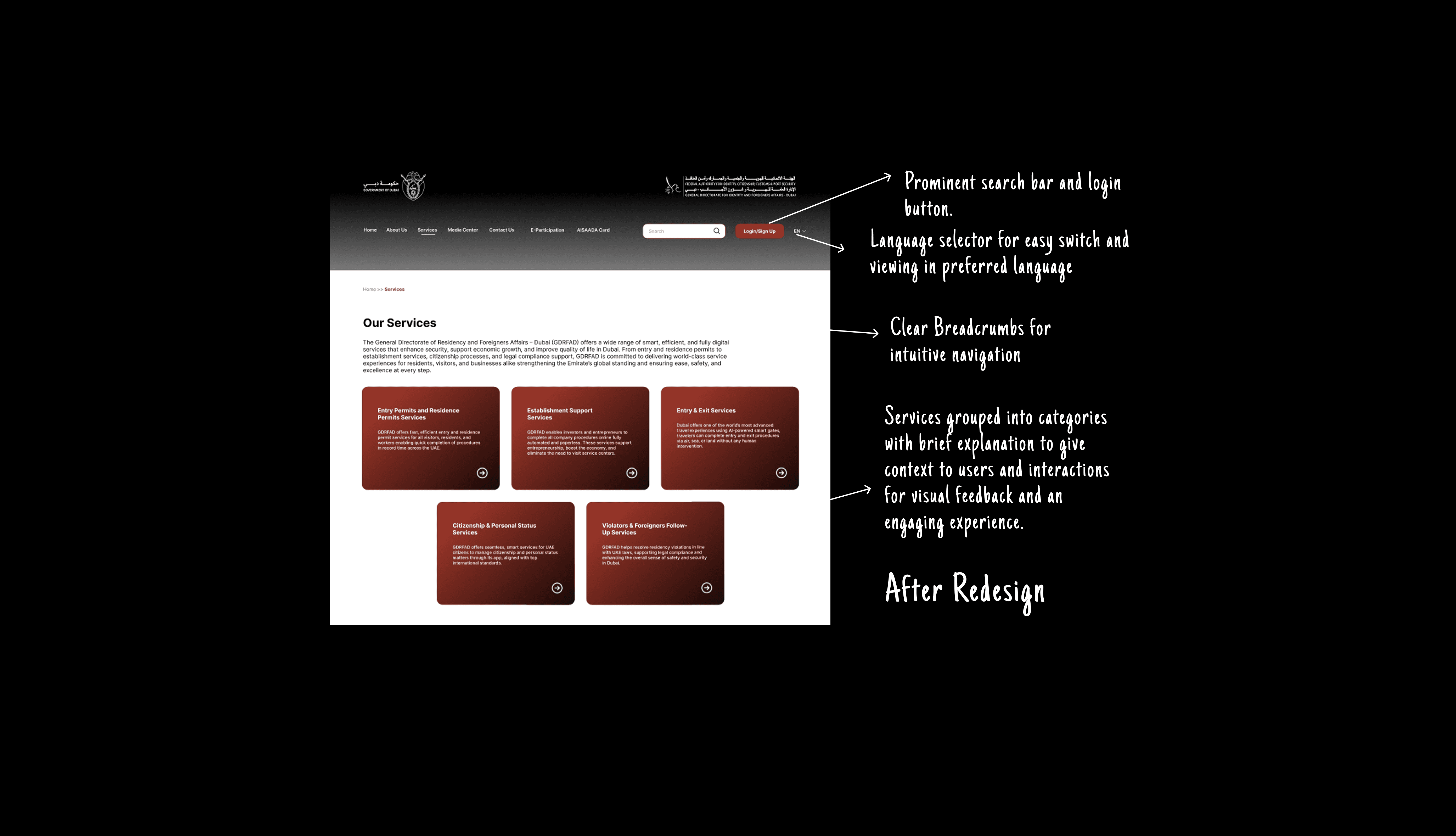
I mapped the existing user flow from start to feedback retrieval, identifying failure points across:
Entry navigation
Login/2FA friction
Form clarity (labeling, grouping, sequencing)
Language inconsistencies
Information visibility (application status, rejection reasons)
How Might We (HMW) Questions:
How might we clarify which sections refer to the sponsor vs the applicant?
How might we prevent form rejection due to language mismatch?
How might we help users locate and understand rejection reasons quickly?
How might we reduce cognitive overload and ambiguity during the process?
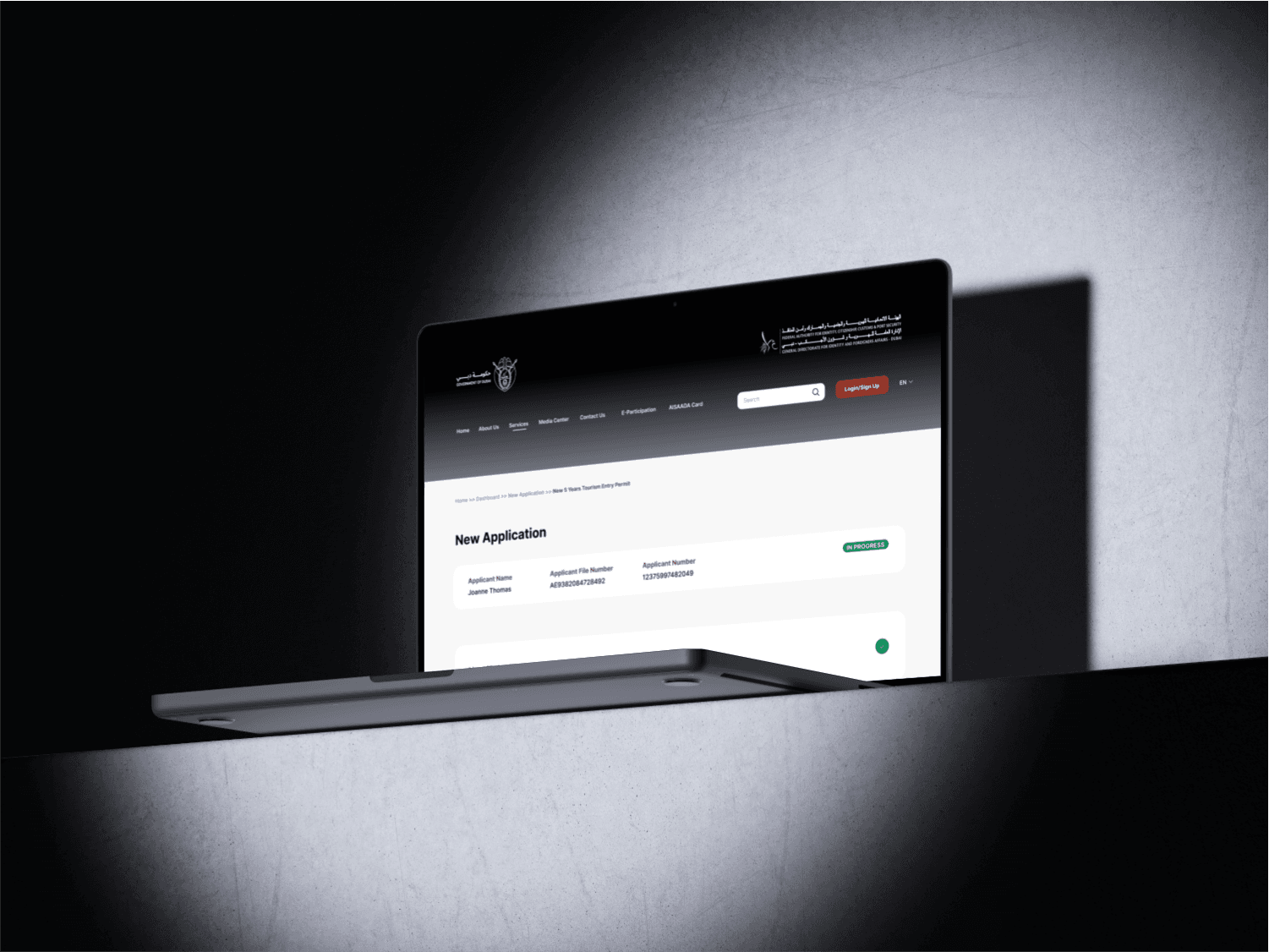
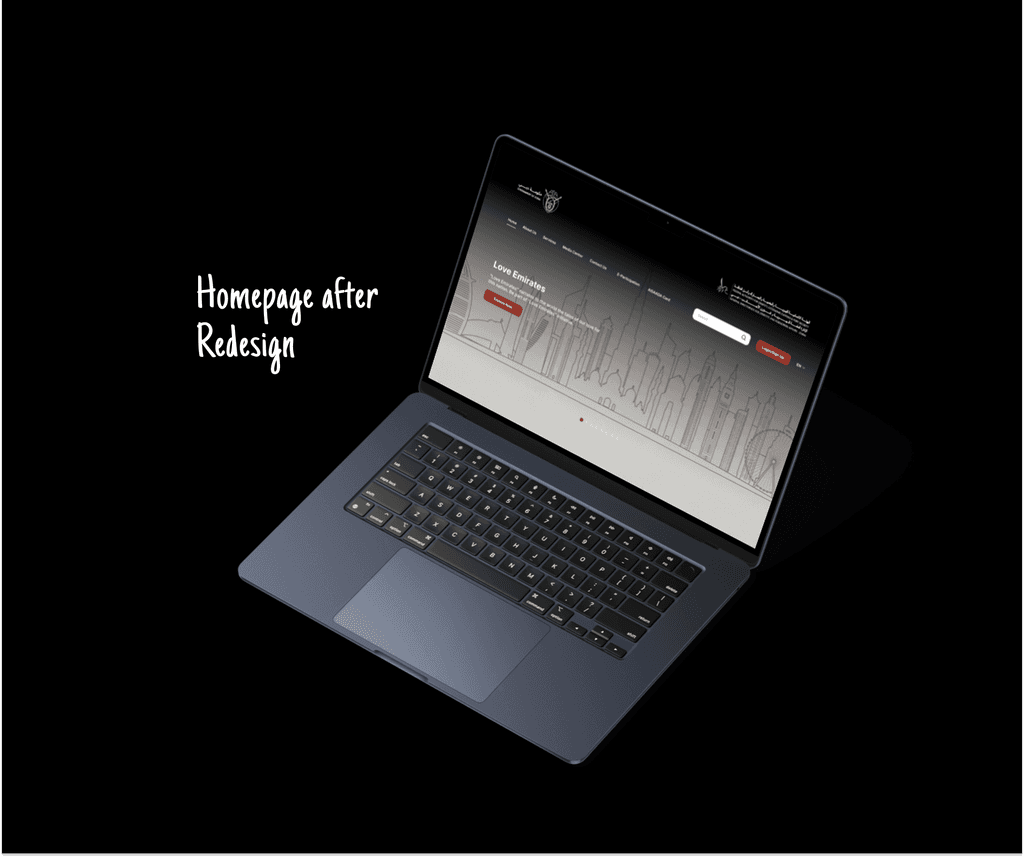
Design Execution (redesigned flow)
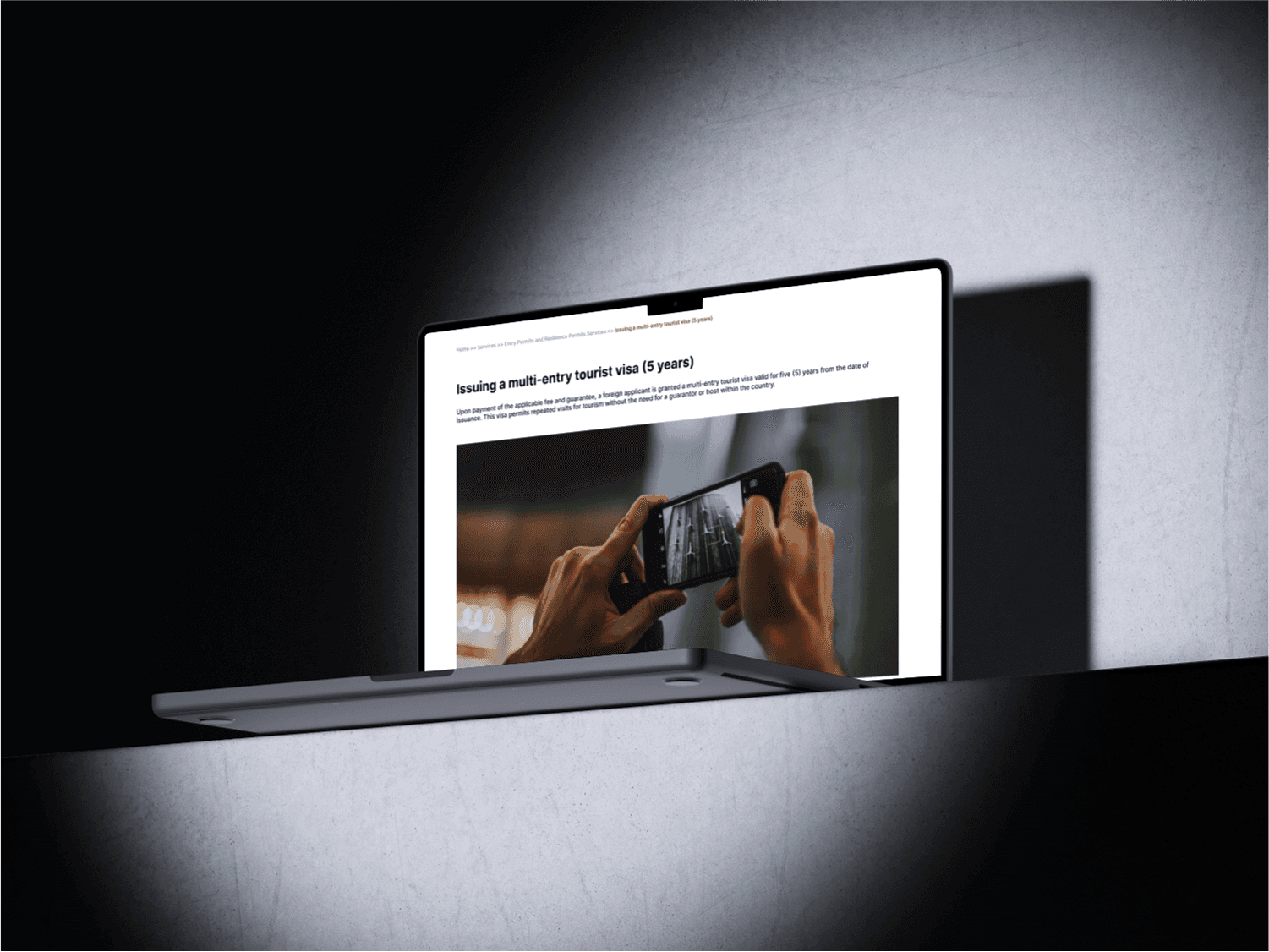
Key UX Improvements:
Static Sections: No more form fields appearing dynamically. All sections are visible from the start.
Labeled Section Headers: “Applicant Details” and “Sponsor Details” are now explicitly titled.
Clear Instructions: Government-tone guidance explains who should fill what, with examples.
Example: Applicant Details
This section must be completed with accurate information about the person applying for the visa. Whether entered by the applicant or a sponsor, all entries must match official documents. Incorrect information may lead to delays or rejection.
Form Field Clarity: Removed dropdowns when only one option is available. These are shown as read-only values.
Contact Info Instructions: Clarified that a UAE number is mandatory and alternate options (hotel/sponsor) may be used.
Rejection Reason Display: Combined English + Arabic messages in a single, labeled block with optional translation support.
Final Impact
This redesign reduced the average completion time from roughly 23 minutes before, to about 9 minutes after, a 62% improvement.
User satisfaction ratings increased from an average of 5.25/10 to 8/10. More importantly, users felt confident and supported throughout the process rather than lost or frustrated.
From a business standpoint, these improvements can lower support costs, reduce form submission errors, and boost successful visa applications, all aligning with GDRFA’s goals of secure, seamless, and inclusive government services.
Learnings and What's Next
This wasn’t just a design challenge, it was a personal one.
Growing up in Dubai, I’ve seen how seamlessly the city delivers experiences. So, when I encountered friction in a process as important as applying for a visa, I felt a responsibility to help fix it. This redesign was my way of honoring that standard and restoring clarity where it was missing.
Now that the reimagined flow has been tested and validated, the next steps are clear:
Polish the visual design for greater clarity and accessibility.
Sort services intelligently so high-traffic ones surface first.
Strengthen bilingual consistency across English and Arabic.
There’s more to be done. But this project proved one thing: with empathy and strategy, even a solo effort can deliver the kind of impact that reflects Dubai at its best.